






First -still playing music right? What music projects do you have going on now?
I live in Western Massachusetts now – in a small college town called Willingham. I’ve bene here for about 10 years now. I’m 72 and have gotten back into music and art.
I have a small barn and it’s fully equipped with everything we need – the PA system and more – to put on shows, and we play there. Sean Rowe said it’s the best venue he’s played in! We play a lot for community events and benefits – that’s important to me.
I was playing in a band called Five Pound Horse, but that project has finished. I have another project coming up but that’s a secret for now.
Your mother was a professional singer in Dublin – what did she teach you about music?
It was great – she had to give it up with eight kids. But she’d sing all around the house – if she put us to bed, she sang. If she made tea, she sang. If she gave us a bath, she sang. It was nonstop singing – I thought all families were like that for a while.
The whole family sang together and played piano – that was common in Ireland at the time. Irish music has had a hug resurgence actually. Every pub has high-quality music in Ireland.
Was your mother happy you got into the music business?
I gave up music for a while – we weren’t successful commercially. She asked why I gave it up. When I told her it was because we weren’t successful, she said “The hell with the music industry!” She sang in the kitchen and loved it, she said. She was right. After that I didn’t worry about the music industry – I did it for my own enjoyment again.
In Ireland too – there was a whole range of music you listened to. Irish radio didn’t have the formatting that radio has now. You’d hear a big band song from Glenn Miller, then a Jimi Hendrix song. It was very expansive. Now radio formats are very narrow – they are more commercial and less for the listener. I liked it better then – we all should be expanding the music we listen to.
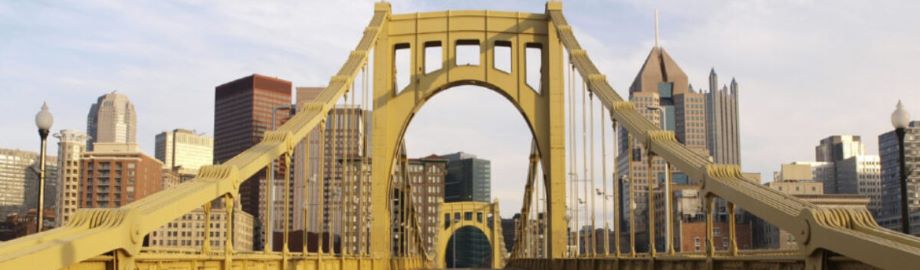
What caused you to emigrate to Pittsburgh – what drew you to the city?
I was 21 – at that time we all had friends who knew someone in America. I actually had family in Pittsburgh, but I went to Philadelphia first. It was overwhelming – America was so daunting to me. We watched American TV in Ireland but it was 20 years behind. So when I got to America I thought everyone dressed like Frank Sinatra! I realized quickly that that America didn’t exist.
Pittsburgh was just much more appealing to me – I liked the rivers and neighborhoods and hills. I loved the policemen – they used to wear white gloves and they’d dance around in the traffic. And I’d go to the Southside with a friend and see all the women dressed up in pearls and dresses at night and we’d go to the clubs.
How did you develop roots there and how did the city influence you and your music?
Pittsburgh was a shot-and-a-beer place when we started – I’m glad we helped change some of that. My daughter Maura is actually in a band there now called Zinnia’s Garden.
You’re also an artist? What is the style of art you most like to work in?
I was never an art student – I was self-taught as an artist and as a guitar player. It doesn’t matter to me if it’s a paint brush, guitar or pen – I like to make things.
With my art, I grew up where Catholicism was a big part of life – and the art had strong Catholic imagery. I never liked that – I liked more contemporary art from people like Jack B. Yeats and Manon Labrecque. I prefer that.
You were one of Pittsburgh’s first post-punk bands – how did that reception start early on – were audiences ready for your unique style – and how did you develop that style?
I never felt like we were a punk band – we didn’t play punk music but got lumped into it in the early days. We started the Electric Banana and packed it. We’d hold events in old warehouses and studios and people loved them – the beer was cheap and it was free to get in. We’d have 10-to-15 bands on the bill.
Who were some of your early influences and how as a musician do you navigate influence while still maintaining you own direction and identity?
I loved the Clash – I met Steve Sciulli at a Clash concert. I never felt like we were influenced by them or anyone though, really. Steve showed up to our first practice with a bagpipe!
Another band I loved was Soft Machine – I adored them. But there was never a discussion of influence or wanting to emulate anyone. We were always free to do whatever we wanted – jazz, rock, ska – we played it all. We were experimental and tolerated each other’s sound. It makes it more interesting – it was a lot like how jazz musicians approach music.
That’s rare that you can explore so many different directions in a band with that level of tolerance and acceptance…
We always had an expansive awareness of different types of music. I remember one music critic’s review said that we sounded like 12 different bands in one – only with one voice. We’d play ska, jazz, rock and roll, then an Irish ballad. We didn’t want to conform to any one thing. When you see radio formats do that, it’s limiting. Too many bands limit themselves that way.
I say that commercial success for us was the best thing that never happened.
You opened up for some big bands like U2 – was that more fun that headlining? How did that come about and how did you work with those guys?
We opened for U2, Ocean’s 7 – who were terrible I thought – Tom Dolan and Pere Ubu – a great underground band. We opened for Echo & the Bunnymen and they all come back to our house after the show. That was an interesting night!
After Five Pound Horse, I was in a band called the Ploughman’s Lunch Band. We played at the Meadowlands after the World Cup and saw U2 there. I was tempted to go say hi and ask if they remembered us but I never did. They did watch us play and clapped for us!
What are some of the experiences that stand out most to you?
Kevin Coyne – we met him and played a gig with him.
The best memory was when we played in London and pulled up in this rusty bus we had. We saw a number of big, fancy buses come in behind us – gigantic ones.
Well, we went to our hotel room and got a case of beer and were making a racket. Well there was a knock on our door – we thought it was someone coming to complain. But it was the guys from Mott the Hoople who told us they heard there was a party! About 10 minutes later another knock – this time it was the guys from the English Beat. So we ended up having a party with a number of English bands!
We also got arrested once after playing at Charlie’s 10 Cent Saloon in Regent Square. I don’t even remember why.
Lastly – what are your thoughts on the music industry now?
There are so many niches now – you don’t have to tour a lot like we used to. You can have a family, you can license your music…you don’t have to run around as much touring now, so I think that’s a good thing.