






First off, what projects you are working on now?
I write short stories primarily and I’m putting together some short stories now for a new collection. I do find myself doing a lot of environmentally-focused stories now. I teach at Chatham College – a climate fiction class and read a lot about that in preparation for the class over the past one-and-a-half years. A lot of it is just looking at the world around me and writing about what I’m seeing.
Why the short story format in All the Names They Used for God versus a novel? Are you interested in writing a novel as well?
I am interested in writing a novel but short stories give me the freedom to explore a lot of different ideas. I can pick up an ideas and play around with it and write a five, 10 or even 50-page short story. I get to work on it then move on to a different idea.
My life is also very structured. I teach, come home and grade papers and have young kids. So I don’t have a lot of uninterrupted stretches of time to work on a novel. I do have one I am working on – I do that over the Summer when I have more time. But my train of thought is too interrupted now – with short stories I can do a draft in one or two days and spend time with it after I get the core thoughts on paper.
When you write is it linear – do you have the whole story thought out in advance or is it a more dynamic process?
It’s definitely a more dynamic process. Every once in a while I’ll jump into it knowing how it will end but I usually figure it out as it goes. I write individual scenes as they come into my head then figure out how to put it all together.
How do you wrap it up cleanly in the end – how do you keep it all connected from beginning to end?
I love to revise more than I like to write. I put a lot of time into revising. Once I have the pieces in order then I go back to the beginning to add breadcrumbs to the story that can add to the story and help carry the reader from the start to the end of the story.
So much of our lives today some impacted by things larger than ourselves – technology, science, politics – it all seems to be overwhelming. Is that theme part of what drives your stories?
I wrote my last book over a long span of time and I didn’t think of the connection between my stories until I read it all together. Then I could see it. Writers- people in general – they have themes they keep coming back to in life. Things they are obsessed with. The idea of control versus rebellion has really interested me. It pops up a lot. Now, I’m thinking a lot about that in an environmental context. I love the outdoors – I love to hike. I spend a good deal of time in Frick Park. But I’m rarely in the wilderness – it takes a lot of time and effort but I love it when I do. So I think about that disconnect a lot as well.
What message do you hope people take away from what you write?
I don’t go into it looking to deliver a message. I find when people do it feels “scoldy”. I do think the more I am in nature I see how things in their natural state all work together. They developed that connection over time. As we try and “improve” on that that’s when things go haywire. And I think about my part and that and am a bit horrified about that.
You have a big influence from fantasy/sci fi – what writers did you like as a child and how did they impact you?
I read a lot of fantasy and science fiction – and realistic fiction from the nineteenth century for some reason as well. I’m not sure why. C.S. Lewis and Madeleine L’Engle – I loved them as many kids did. Madeleine came to Pittsburgh when I was in high school and a friend and I went to try and see her speak. We couldn’t get tickets so we stood outside and waited for her to see if we could talk to her like it was a Beatles concert. It was like those videos you see of Beatles fans when they almost faint when they see the Beatles!
I understand that older people feel like those books are childish, but they aren’t to me. Speculative fiction has become more mainstream now. My teacher in grad school – Kevin Brockmeier – he is a terrific writer who pulls things out from the darkest corners of the soul. I was fortunate to work with him.
How do you instill that sense of the fantastical in your life – is it a conscious search for you ? How do you find that inspiration for stories?
Things that are weird are interesting to me. I do write some realistic fiction but looking at life through a science fiction and fantasy lens is more natural to me. Up until a year ago I would have said my realistic fiction wasn’t good but now I’m working on something that I still like. Maybe I figured something out! Some writers can write an entire scene on something like people eating dinner and make it fascinating, but I still need drama in what I write!
A lot of emphasis on hope and standing up to adversity and rebellion – how important are those messages in today’s environment?
It’s so important. Science Fiction has been a rebellious writing form, historically. 1984 for example. The practice of imagining how things could be different is so important. Exploring how if we keep doing what we know – how we will end up. That’s what Fahrenheit 451 and 1984 are ab0ut. If we go into it assuming nothing – that we won’t need cars, don’t need houses – and explore how we can do things differently. That can be powerful – the way things are can be different.
Every get approached by someone wanting to take your work to film? Would that be of interest?
Yes – I do have a piece that has been optioned for film. When I got on that train, my agent told me to enjoy the ride because 99% of optioned stories don’t get to the film stage. Don’t expect to see the movie! But it’s been cool to see the Hollywood process. There are a lot of steps and each step takes time. Watching it all, I’m amazed how many movie ideas actually get filmed but never make it to the screen.
How has Pittsburgh influenced you and your writing?
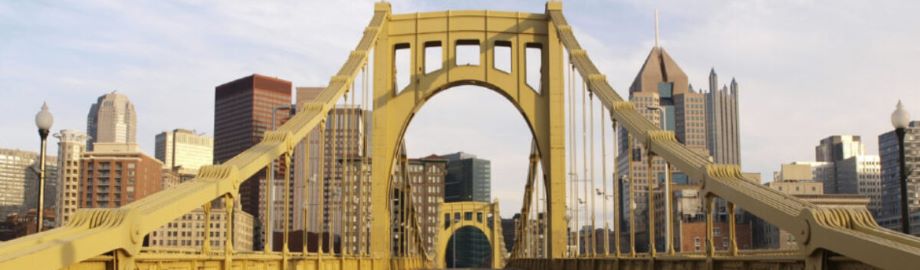
I love Pittsburgh – I love how many pockets of green there are. There are such great parks. The number of stories where I fit in Frick Park is crazy. The city has had a big effect on me. I’m interested in the juxtaposition with the city’s parks and pockets of green and its industrial past, which is how many outsiders still see the city. You can still see the landmarks and memorials and the vestiges of it.
Lastly, on a totally different track, being from Pittsburgh, are you a sports fan?
I am definitely a Steelers fan. I was joking with a parent the other day – my daughter plays soccer but every sport I did was a loner sport – archery, hiking… But I do love watching football!