






First, can you talk about what inspired your move into politics?
After I left the Steelers I went into banking for several years as a lending officer – then the bank was bought out. After that I worked as a CFO for a broker-the dealer that bought that company got bought out too.
I saw the Mahoning County Auditor role open up and I looked at the job description – it looked a lot like what I had done before. So, I ran for office in 2014 and beat the incumbent then ran unopposed two times since. I’m the first Republican to be elected into an office here in Mahoning County.
What did your work was a CFO do to help prepare you for this move?
I think it was more just working with the Rooneys – to see Dan and the Chief – he was still there everyday – to understand the “Rooney Way.” How they did business and treated people. I go back to that many times.
How did you get started with the Steelers in 1988 – what was the process like?
I was in the lending department at Mellon Bank, calling on financial institutions in the Kentucky, Ohio and Pittsburgh area. I had a friend who had a parallel job at Pittsburgh National Bank and he told me that a client of his – an entertainment company – was looking for a CFO, and wondered if I’d be interested in the job. I had wanted to become a CFO and so he sent them my resume.
That was the Steelers. I talked to Dan and Art and I think I was just the type of person they wanted. I had a CPA and MBA and they wanted someone who had those qualifications – who can handle the banking and investment work. I was also a Catholic and went to the same church Dan went to – not that that’s why I got the job – but I think they felt I fit their culture. I was the kind of person they wanted.
What was/is the role of an NFL CFO – especially with the Steelers?
Every business has financials that need maintained – no matter what business you’re in. Keeping the financial statements and management statements. Where you are versus budget.
What made it different was that the NFL wanted to see your budget too – they wanted to understand your revenue and expenses – stadium costs, etc. I had to present the three-year and one-year projections.
A lot of what went into things was digging into the contracts of players and understanding where the revenue was coming from. We got a percentage of the TV contracts – 1/28th, plus the home and away game splits and NFL properties revenue. They would compare you to other teams. We also had an annual audit we had to prepare for.
We didn’t have health insurance for players – that was done through the league – we just had to provide that for the staff.
What were the biggest challenges and things to focus on when you arrived?
I introduced the use of spreadsheets and Excel – a lot take that for granted now.
At the time they were consolidating ownership. The Chief used to give shares to each of his grandchildren – they had 33 grandchildren. So they bought out those shares and consolidated ownership to the five bothers.
They were getting ready for the Chief to step down, which was timely since he passed away the following year.
Any job takes a year to learn. The prior CFO had been there for 20 years. And the team was in transition. Art Jr. left a few years before, ownership was changing….the early 90s were a transition period. A year after I left Chuck retired.
Any good memories you can share of your time there?
You learn early about the psyche of an NFL team. Three Rivers had one set of windows in the whole building. They said you were either on the inside or the outside. I used to call my wife to ask what the weather was like because I couldn’t see anything outside.
My favorite recollection was when I traveled with the team. The front office went with the team to away games. Dan Ferens and I roomed together and when we flew there was a certain seating order. First were the coaches, then the veteran players, behind them the younger players then the trainers and doctors, and behind them Myron Cope and Jack Fleming.
Dan Ferens, Dan Rooney, Chuck Noll and I all used to go out for dinner together. I used to love those conversations. We never talked football – they were tired of talking about football and I had nothing to offer them about football! They were social events – simple and pleasant. When waiters would come by they’d always say “Yes Ma’am” or “No Sir” to the waiters.
On game days Dan Ferens and I would meet some notables at the stadium – I remember Howie Long joking around with us. Before the game Dan and I would go to accounting and pay them for the tickets we were allocated for that week. And during the games I kept the stats on all the players in the front office box. We all wore suits and ties then.
Any memories of The Chief?
One thing that stands out is we all did things together. He wanted us to be together not all going our own ways.
The Chief always had words of wisdom to share and good stories about everyone – but he would never tell negative stories on other people.
I was there at training camp when he had his stroke – they called me into his office and I helped him into the ambulance. He passed away a week later. Getting through that was difficult.
Any good memories of the players?
Well evidently before I got there some of the coaches would go out for lunch – grab a bite to eat and a few drinks – and not come back for practice. I’m not sure who those coaches were! But after that they decided to provide lunches for the players and staff. Nothing gourmet, but it was all practically outside of my office.
I sat down one day next to Joe Greene – he was such a huge man. His thighs were four times the size of mine! That was the season we lost those first two games badly and the national media was there saying Chuck Noll was done. Well, O.J. Simpson came in and sat with us and talked to Joe. He was working at NBC at the time. It was fascinating hearing them talk about the games they played against one another.
How closely did you work with ownership on player issues – including negotiations and pay?
They didn’t have a GM then – it was all done by Dan Rooney. Dan had an Accounting Degree from Duquesne so he knew the football and accounting side of things. I tracked and reported the numbers but you could see how he worked. All the draft picks were slotted and given a pay range. Those numbers were reported by every team to the NFL so every term knew the range per pick. The Steelers stayed lock-step with that range.
Now, was that collusion? I don’t know. Every team started with roughly the same revenue base. It got to the point for me that once I knew the team’s schedule, I could project the revenue for the season because I knew what the gate numbers and percentages were for each team.
What would surprise people most about the Steelers from your lens?
They were not cheap like some said. They weren’t even frugal. They just knew how to allocate their resources appropriately. They were not cheap with their staff pay or how they treated players. We had a larger complement of scouts and coaches than many teams – probably twice as many as the Bengals. They just knew value and how to spend their resources.
Players were young men. Some sophisticated, some not. Some bright, some average. You couldn’t categorize them. But most were used to a certain level of accommodations they got in high school and college that you didn’t get in Pittsburgh and in the pros. You have to learn that quickly. That really made or broke who made it in Pittsburgh.
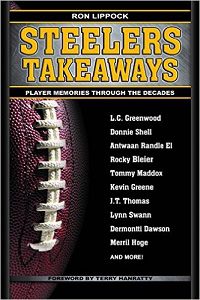
Read more by former Steelers via the book Steelers Takeaways: Player Memories Through the Decades. To order, just click on the book: