






First off, any projects you’re working on now?
At the moment I’m working on a Godzilla project – Godzilla Monsterpiece Theater. I did a book two years ago – Godzilla Versus the Great Gatsby which was successful. Now there’s a whole series of literary Godzilla mashups. Godzilla Versus Robin Hood .. . IDW has been doing 10-15 years of Godzilla stories.
How did you get your start in comics – how did The Myth of 8-Opus start?
I went to college at Pitt to study all kinds of art – sculpture, painting, film-making and comics. When I was there I did an anthology with a few guys my age called Codex Pop – we each did a bit and I did a Jack Kirby-esque style science-fiction story.
That’s where The Myth of 8-Opus was derived from. At the time it was real a Xeroxed zine. I submitted it for a Xeric Grant- that was designed to help people get a foothold into comics – to help them be able to distribute and sell them. Well, I got the grant and that really gave me my calling card. It all went from there.
Were there any mentors that helped you – especially in the Pittsburgh area where there seems to be a big comic community?
It’s funny to think of many of them as mentors since they were just a year or a few years older than me. But they were further into it than I was and gave me little bits I needed. Randy Costanza was an artist and musician in Pittsburgh – I could draw but didn’t know how to put it into a book. He helped me with that.
Frank Santoro – he helped too. Wane Wise showed me what it took to get the Xeric Grant. He gave me advice – he was the first person to get the grant. I got the grant on my first try – it usually takes people a few tries. A lot of his advice helped me get over the hurdle.
Ron Frenz, Pat Olliffe, Chris Mueller, Joe Jusko – they were comic professionals and had other perspectives to share. They helped influence me and with the art and pinup for my book.
And looking back – Erik Larsen who is now the CFO at Image Comics. He was really helpful – he deliberately wanted to help me. He showed me what I needed to be doing. He told me that The Myth of 8-Opus is the kind of book I should be doing with Image – but I needed to do this and this to get it there. He was very generous with his time and attention to help with an unknown quantity like me. While The Myth of 8-Opus didn’t end up at Image he eventually became the Publisher there and brought me and Joe Casey together where we hit it off and created Godland – a book we did for nine years together.
What influence did living in the city of Pittsburgh have on you?
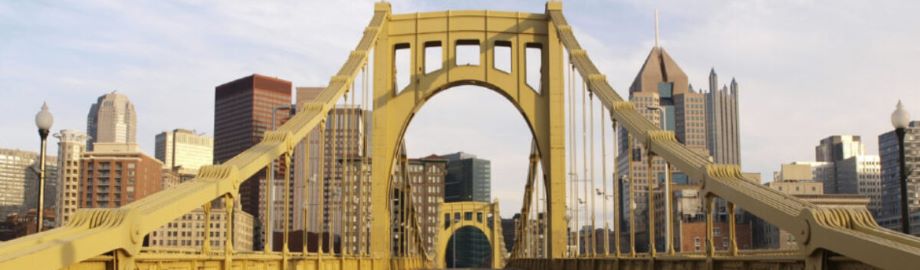
By the 90s Pittsburgh had developed a DIY comic book scene. The city had a solid punk scene and I think the comic book was part of that then. So I think that part of Pittsburgh impacted me.
Where do you get ideas from for subsequent comics like Godland”, “Freedom Force” and American Barbarian”? Are there themes you like to focus on?
Largely, I like action-driven stories. I look for the opportunity for action. Science-fiction usually offers that and way-out ideas to write about.
Having my antenna up – allowing for quiet moments and being open to ideas that don’t make sense at first – that is a big part of it. I sketch and used to have an idea notebook – now I use an iPad. An iPad allows me to add layers as I come up with new thoughts so I am creating the comic book over time right on the iPad.
How do you approach the design of a book – what goes into the inking/color decisions for you?
Comics now are created in this era of bright, glossy paper and tons of color. That doesn’t speak to me. I looked for an aesthetic that had more tooth and texture. That has eluded me still. I looked to the past for the next best thing – paper that was toothy, imprecise printing….that added a feeling of mystery and smokiness that felt closer to reality to me.
You worked on your own and for folks like Image and Marvel – what is the difference for you personally and preference?
I became fascinated at first, doing it on my own. But it was had finding someone to publish the work. With a larger publisher I know this comic I’m working on will become a comic in print – it won’t just exist in some ethereal way. It’ll have a larger distribution. I wants as many people as possible to enjoy and purchase my work. For my next Godzilla book for example, there’s no question it will be in stores and have a wide distribution.
Do you see self-publishers like yourself making real in-roads against the behemoths like Marvel and DC?
It’s an exciting time – many people still like to self-publish and have done so – especially as they start out. That’s not for me – I’ve done it. Some love the process, but after coming up with it, drawing it, assembling it….I like that part, but dealing with printers and having trucks drop boxes of comics to your garage…I’m just not interested now. You get some enjoyment out of that but I wanted to build a life. You don’t always have a choice and I understand that – sometimes you have to do it that way.
Is that why you left comics for a while – and how did that help you regain any perspective/new ways to look at things?
I did a comic for Image – it was shortly before I quit comics for a while. it was an original concept that grew over time – it gestated over time. It was called “Space Opera Xanadax: Across the Unknown Dimensions of the Galaxy“. That was a return to form for me.
But overall it was frustrating. You create a graphic novel with the faith that it ends up somewhere and it doesn’t. By the fourth time you start thinking “What am I doing here? Am I in denial?” I thought I would have infinite optimism but I wondered if there were other things I should be doing.
A lot of people in the comics business are like me – go-go-go. I just needed a break. I had jury duty right afterwards – I was just sitting in limbo. I did the DIY thing – that wasn’t working for me. But I knew the comic book industry was still calling to me. I started thinking about the big publishers and how to do things their way instead of doing my own thing hoping for the best.
I researched the comic book publishers’ guidelines- many didn’t accept submissions. IDW did though – they accept outside solicitations. I sent my work in and heard from John Barber there shortly after and he started sending me assignments. “Now I’m in the comics business!” He asked later if I wanted to do a G.I. Joe-Transformers crossover. I said “Yes!” This was the way to do it.
You also do the The Total Recall Show podcast – how did that start and what does that focus on?
I did the Cartoonist Kayfabe podcast with Jim Rugg – then the pandemic happened and we weren’t all able to get together. Me and Matt Zeoli – we were friends and would have conversations about movies and games….after a while we decided to do our own show based on those conversations.
I have an endless need to talk about minutia – my wife is very patient with me but she and others in my life aren’t always interested in talking about old shows or movies. There are only so many times my wife can hear that! So when I start talking to her about that stuff I catch myself and realize I’m doing a rough draft of the next show.
As a freelancer working alone, stuff works up. The show helps me to get those thoughts out there.
This work can be a lonely business at times no? How do you handle that?
That’s such a part of it. I realized early on that I needed quiet, alone time. That can be hard to get. But the pandemic taught me that you also need to be around people. The isolation took its toll – it wasn’t healthy. The happiest times for me now are when I find myself in a studio-type environment around other people. I try to spend time working at coffee shops and libraries so it’s not a completely monastic thing. But you do also need a certain amount of alone time too.